

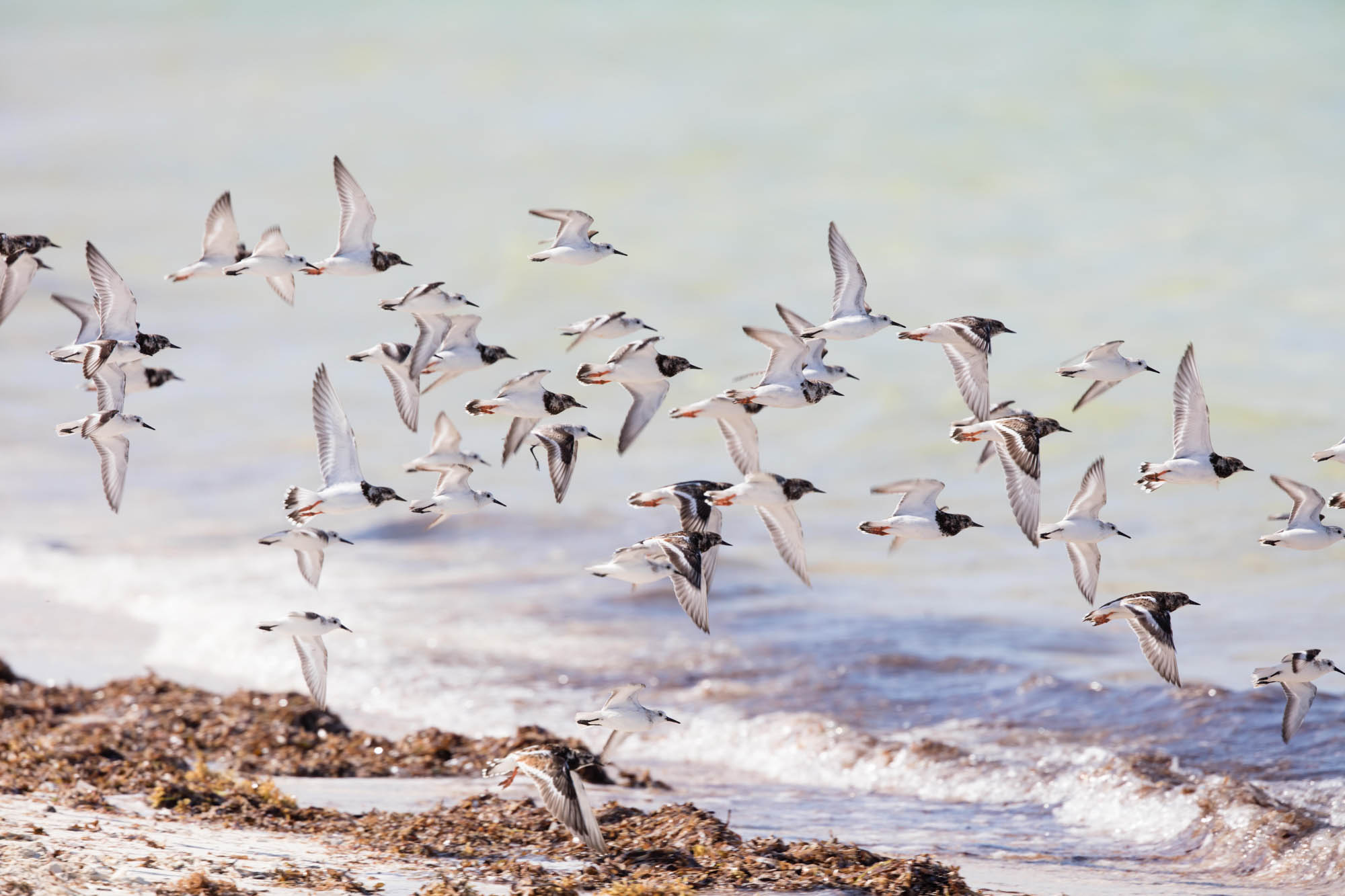
On the second annual commemoration of World Migratory Chook Day 2024 on 12 October, the worldwide marketing campaign, organized by a community of worldwide companions, requires pressing and sustained motion to guard each migratory birds and the bugs they rely upon for survival. This yr’s theme, “Defend Bugs, Defend Birds,” emphasizes the crucial position bugs play within the lifecycle of many migratory birds and attracts consideration to the alarming international decline in insect populations.
The Conference on the Conservation of Migratory Species of Wild Animals (CMS) –a biodiversity treaty of the United Nations and one of many foremost companions behind the World Migratory Chook Day marketing campaign– ready the primary examine of its variety on insect decline and its relevance for migratory species, which it introduced at its Fourteenth Session of the Convention of the Events (COP14) in Samarkand, Uzbekistan. Insect Decline and its Threat to Migratory Insectivorous Animal Populations discovered that insect decline is contributing to inhabitants losses of many migratory insectivorous (insect-eating) species, significantly these which depend on them as their foremost supply of meals. Bugs are important to the survival of not simply migratory birds worldwide, but additionally bats and fish. Their decline might even have oblique results by altering ecosystem features and the habitats therein –comparable to altering vegetation, which in flip might present much less cowl for ground-breeding species, or provide much less insect-pollinated fruits for frugivorous (fruit-eating) birds.
“Regardless of variations in magnitude throughout ecosystems and areas, scientific proof revealed that no doubt, we face an insect decline on a worldwide scale. This may be measured for instance because the losses in complete insect biomass or species richness over time,” mentioned Dr David Ott from the German Leibniz Institute for the Evaluation of Biodiversity Change (LIB) and one of many authors of the report. “To cope with the results of insect decline, we have to perceive that species are a part of advanced, interconnected communities, and that biodiversity is crucial for ecosystems to work correctly and supply providers to people. The causes of insect decline are additionally not separate, however a mixture of a number of linked elements,” he continued.
Key findings of the CMS report embrace:
- The decline in insect biomass, abundance, and variety poses a serious risk to migratory insectivorous species, lowering meals availability throughout migration and different levels of their lifecycles, and endangering many species monitored by CMS.
- Land-use change, local weather change, and air pollution are the primary drivers of insect decline worldwide and these drivers are sometimes intertwined and should act concurrently.
- Bugs and the migratory species that feed on them are vital for ecosystem functioning and supply crucial ecosystem providers, comparable to pollination.
- There are nonetheless gaps in understanding the impacts of insect declines on migratory insectivorous species, with extra data wanted on the inhabitants standing and traits for numerous species for each birds and in addition bats particularly.
A 2020 study printed in Science journal signifies that we’re shedding roughly 9 per cent of the world’s terrestrial insect inhabitants each decade. Insectivorous migratory birds comparable to swallows, raptors and waterbirds depend on bugs and their larvae as important meals sources throughout their often-long migrations, breeding durations, and when feeding their younger. Many birds additionally time their migrations to align with peaks in insect abundance. As insect populations (estimated to be two-thirds of all terrestrial species) lower, these birds face diminished meals availability, impacting their capacity to outlive and reproduce. Past their position as a meals supply and their contributions to sustaining wholesome ecosystems, the first-ever State of the World’s Migratory Species report printed earlier this yr, additionally emphasised the intrinsic worth of bugs, underscoring the pressing must halt their decline.
To deal with the lower of insect populations, the CMS report on insect decline recommends:
- Setting up conservation measures to make sure availability of meals for migratory species.
- Intensifying and supporting insect monitoring efforts and trade of knowledge.
- Participating in multi-stakeholder efforts to enhance habitat variety and connectivity.
- Creating tips for probably the most pressing or prioritized actions recognized to deal with the cascading results of insect decline.
World Migratory Chook Day 2024
World Migratory Chook Day is a world academic and awareness-raising marketing campaign that promotes conservation efforts for migratory birds and their journeys throughout borders.
The marketing campaign is organized and coordinated by a worldwide community of companions whose work focuses on the conservation of migratory birds the world over’s varied flyways: The Conference on the Conservation of Migratory Species of Wild Animals (CMS), the Settlement on the Conservation of African-Eurasian Migratory Waterbirds (AEWA), the East Asian-Australasian Flyway Partnership (EAAFP) and Setting for the Americas (EFTA).
Celebrated on two days annually (in each Might and October) to mirror the cyclical nature of chook migration and the various peak migration durations within the northern and southern hemispheres, World Migratory Chook Day triggers lots of of academic occasions world wide, united by their frequent purpose of elevating consciousness and advocating for worldwide chook safety.
Annually the marketing campaign encompasses a central theme, prompts motion, and coordinates international efforts to safeguard migratory birds and their habitats.
Some examples of actions being inspired via this yr’s marketing campaign embrace:
- Creating legal guidelines and laws to guard bugs and migratory birds.
- Planting native gardens to create appropriate habitats for wildlife.
- Choosing natural merchandise, thereby avoiding dangerous pesticides.
- Lowering habitat destruction linked to property growth or landscaping follow.
- Educating family and friends in regards to the vital position bugs play in our ecosystem.
- Supporting academic efforts geared toward insect conservation, together with selling their conservation on the group degree.
- Encouraging native to international motion to keep up and restore pure habitats for bugs, birds, and different wildlife.
