

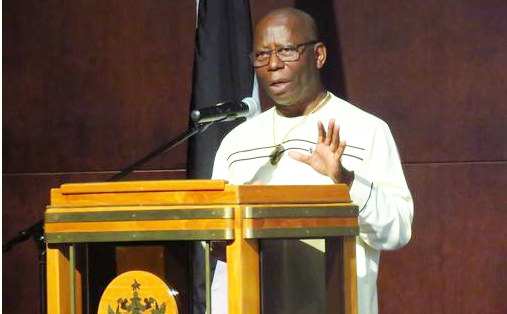
Trinidad and Tobago’s Prime Minister, Keith Rowley, has proposed a major change to the nation’s coat of arms, suggesting the elimination of the three ships representing Christopher Columbus’s expeditions and their alternative with a picture of the steelpan, the nationwide instrument.
Rowley’s proposal, introduced on August 18, has been met with enthusiastic assist from some quarters however has additionally generated debate inside the capital. The ships at the moment depicted on the coat of arms are related to Columbus’s voyages that led to European colonization and exploitation of the Caribbean.
The transfer aligns with a broader regional pattern the place Caribbean nations are re-evaluating historic symbols tied to colonialism. Critics argue that the ships’ elimination may erase essential historic references, whereas proponents see it as a obligatory step in direction of correcting historic inaccuracies and distancing from colonial legacies.
Dr. Claudius Fergus, a historian and chair of the Nationwide Committee on Reparations, praised the proposal. He emphasised that the change isn’t an try and erase historical past however to rectify it. “Each technology has an obligation to reinterpret their historical past and to appropriate the falsehoods on which a few of that historical past would have been written,” Fergus said. His committee, which is a part of the Caricom Reparations Fee, helps efforts to handle the legacy of slavery and colonialism.
Rowley’s announcement was well-received at a conference of his Individuals’s Nationwide Motion social gathering, the place he confidently declared the change can be enacted earlier than September 24, citing parliamentary assist for the modification.
Fergus highlighted the importance of changing the Columbus ships with the steelpan, an emblem of Trinidadian tradition. “The steelpan was born in Laventille, an space that confronted extreme social and racial prejudices. Its acceptance at the moment represents a overcome these historic challenges,” he stated.
Nevertheless, the proposal has sparked various reactions in Woodford Sq., Port of Spain, a historic web site of political discourse. Roberto, an area resident, argued that the federal government ought to concentrate on addressing poverty and questioned whether or not eradicating the ships would influence historic schooling for future generations. Brunan Tavernier, a telecommunications employee, dismissed the difficulty as irrelevant to urgent nationwide issues like crime.
Then again, some residents see the elimination of the ships as a constructive change. Yafeu Iregi expressed assist, suggesting it may mark a broader shift away from colonial remnants in Caribbean society.
This proposal is an element of a bigger dialogue on colonial id in Trinidad and Tobago. A cupboard-appointed committee is about to evaluate the location of statues, monuments, and signage within the nation and can search public enter on these points.
Trinidad and Tobago’s transfer displays a rising pattern throughout the Caribbean, the place nations are more and more reassessing and altering symbols of colonial legacy. This follows Barbados’s latest choice to take away the British monarch as head of state, with different Caribbean international locations contemplating related modifications.
Trinidad and Tobago coat of arms change Keith Rowley steelpan nationwide image colonial legacy Christopher Columbus ships Caribbean id historic symbols Caricom Reparations Fee Trinidadian tradition decolonization efforts
