

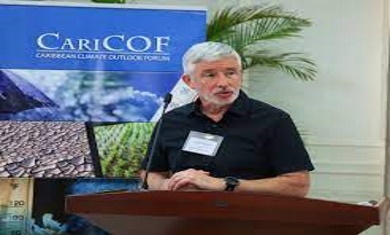
BRIDGETOWN, Barbados, CMC – The chief local weather scientist of the Worldwide Analysis Institute for Local weather and Society (IRI) at Columbia College, Dr. Simon Mason, says over the previous few years, scientists have been in a position to predict heavy rainfall and dry spells not less than 4 weeks prematurely.
Mason instructed a two-day that introduced collectively specialists that “these so-called sub-seasonal forecasts will turn out to be routine from among the main world facilities early in 2024.1.26
“There have been some thrilling developments in the previous few years within the science neighborhood’s potential to foretell heavy rainfall and dry spells two to 4 weeks prematurely,” he mentioned, with the delegates being instructed that the Barbados-based Caribbean Institute for Meteorology and Hydrology (CIMH) has been anticipating these developments, and after a sequence of analysis and coaching actions, produced its first-ever experimental sub-seasonal forecast at the latest Caribbean Local weather Outlook Discussion board held in Dominica in November final yr.
“Such forecasts present the precious potential to enhance water-resource administration and flash-flood management within the Caribbean area, however collaboration with the water administration neighborhood is required to make sure that the forecasts are tailored, designed, and interpreted to maximise their profit,” Mason mentioned, including that the workshop supplied “ a superb alternative to take these vital subsequent steps to strengthen resiliency within the area.”
The workshop ended on Thursday and was organized below the Intra-ACP GCCA+ Programme within the Caribbean: Enhancing Local weather Resilience in Caribbean Discussion board (CARIFORUM) nations led by the Caribbean Group Local weather Change Centre (CCCCC). It was hosted by the CIMH in collaboration with the IRI, with help from the European Union (EU).
CIMH principal Dr. David Farrell mentioned the workshop supplied a useful platform for water managers and meteorological providers to reinforce their understanding of sub-seasonal to seasonal forecasts and the significance of those forecasts for predicting water availability at sub-seasonal and seasonal scales.
“By collaborating with our companions within the CARIFORUM nations, the C, and the IRI, we’re strengthening our capability to handle local weather resilience and enhance water sources administration within the area,” Farrell mentioned, additionally thanking the EU for its help of the Intra-ACP GCCA+ Programme within the Caribbean.
The lead challenge supervisor on the Belize-based C, Ansel Dubon, mentioned that the actions, inclusive of the workshop, being undertaken by the CIMH and IRI are important to reaching the general goal of the GCCA+ program, which is to cut back dangers and vulnerabilities from local weather change to human-made and pure belongings in CARIFORUM nations.
“We sit up for the varied officers who participated within the coaching making use of the brand new capacities to learn the water provide of their respective nations and, by extension, the area,” he added.
The organizers mentioned the workshop would help knowledgeable decision-making and catalyze collaborative efforts to handle local weather challenges, enhance water sources administration, and improve resilience within the Caribbean area.
Associated

