

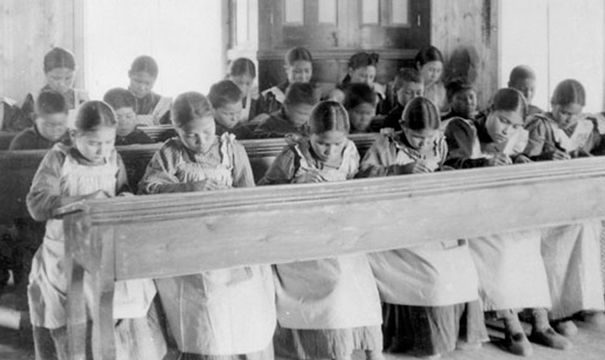

When the federal authorities declared a vacation to commemorate the loss of life of Queen Elizabeth II two years in the past, it stirred a fancy debate about what we’re really honoring. Is it merely a gesture of respect for a figurehead of the British monarchy, or does it mirror a deeper, extra troubling legacy? For a lot of, this second turns into a stark reminder of the unresolved points surrounding Canada’s colonial previous and its impression on Indigenous peoples.

Unquestioned reverence for the British monarchy is a slap within the face to Indigenous communities and a denial of Canada’s complicity within the historic atrocities dedicated below British rule. Earlier than Confederation, the British employed brutal ways to beat areas like Nova Scotia, instilling worry in Indigenous populations. The actions of Lieutenant Normal Edward Cornwallis, who led the Halifax fort and supplied bounties for the scalps of Mi’kmaq troopers, illustrate a horrific chapter of terror and violence. By the mid-1760s, the Mi’kmaq had been largely decimated, and related fates befell the Beothuk in Newfoundland.
The legacy of violence continued as British forces, below Normal Jeffery Amherst, distributed smallpox-infected blankets to Indigenous peoples in an try to exterminate them. Amherst’s notorious letter reveals the chilling intent behind this act: “You’ll do properly to attempt to inoculate the Indians via blankets in addition to to attempt each different methodology that may serve to extirpate this execrable race.” This was not an remoted incident however a part of a broader technique of genocide that noticed Indigenous peoples systematically dispossessed of their land.
As we mirror on these historic injustices, it’s essential to acknowledge the broader implications of Canada’s function throughout the British Empire. Through the years, Canadians participated in quite a few navy campaigns throughout Africa and Asia, supporting British colonial ambitions. In 1876, the Royal Army School of Canada was established to coach officers for the empire, reinforcing the concept Canadian identification was intricately tied to imperialism. Between 1880 and 1900, RMC-trained troopers engaged in at the least 28 imperial campaigns, usually with devastating penalties for native populations.
Some of the tragic examples of this involvement was through the Second Boer Warfare from 1899 to 1902, the place Canadian troopers participated in a marketing campaign marked by a scorched-earth coverage that devastated Boer communities. British forces forcibly relocated roughly 200,000 people to focus camps, ensuing within the deaths of about 28,000, predominantly kids. This darkish chapter in historical past underscores the extent to which Canada, in its eagerness to align with British imperialism, contributed to widespread struggling and lack of life.
The repercussions of those colonial pursuits prolonged into World Warfare I, which might be seen as a end result of imperial rivalries. The battle decimated populations in Africa, the place an estimated a million individuals misplaced their lives. Canadians additionally performed a job on this battle, with troopers collaborating in campaigns that furthered British colonial pursuits throughout the globe.
As we study these actions, it turns into more and more clear that Canada’s historical past is intertwined with a legacy of colonialism that has not been adequately addressed. The 2022 choice to commemorate a monarch, representing a system that perpetuated these injustices, raises important questions on whose historical past we select to have a good time. For Indigenous peoples, the commemoration was not simply an acknowledgment of a figurehead however a painful reminder of ongoing struggles in opposition to colonial legacies.
In honoring a lifeless Brutish monarch, the federal authorities neglected the broader implications of our colonial previous. It alienated those that have been marginalized and disempowered by the very programs of oppression that this monarchy symbolizes.
As we glance the long run, it’s important to confront this legacy with honesty and braveness. True commemoration should transcend empty gestures; it ought to encourage a dedication to justice. In recognizing the previous, we are able to start to forge a future that respects the dignity and rights of all peoples, unshackled from the constraints of colonialism. Solely then can we’ve got real reconciliation.
