

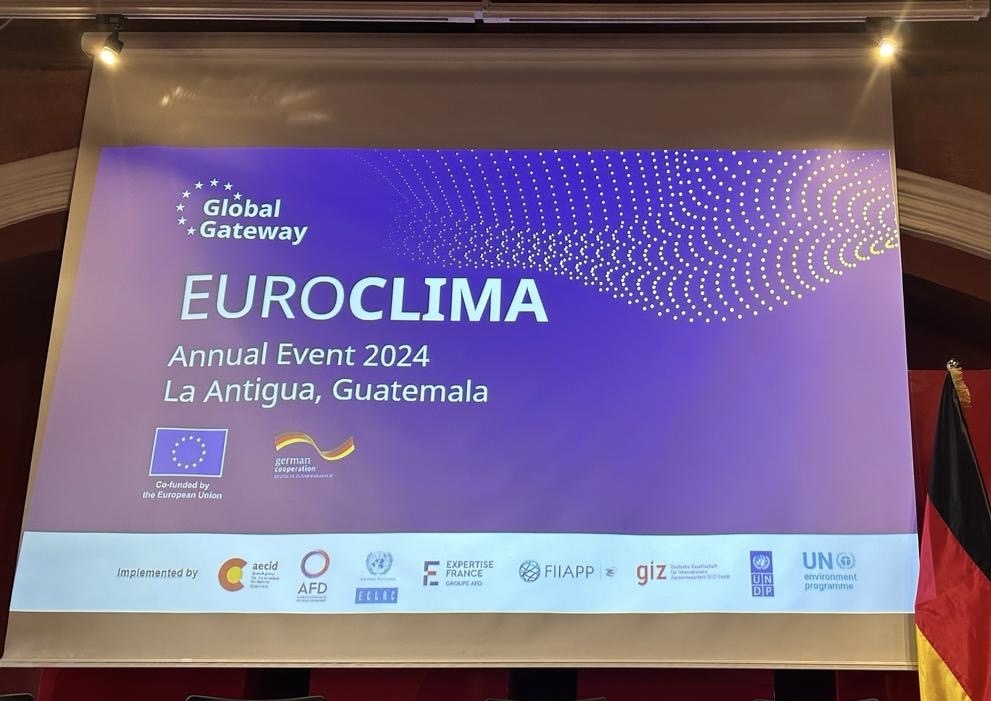
ST. JOHN’S, Antigua, CMC—Authorities Antigua and Barbuda officers are among the many 100-plus delegates attending the Euroclima Annual Assembly in La Antigua, Guatemala.
The nation formally joined Euroclima in November 2023, following the European Union’s enlargement of the 15-year-old Latin American-focused Programme to incorporate the Caribbean area, with a launch occasion in Could 2023.
The Euroclima Programme implements demand-driven actions to enhance resilience to local weather change in ecosystems and susceptible communities, together with ladies, youth, and indigenous populations. It achieves this by strengthening establishments, enabling frameworks, plans, and insurance policies, and securing monetary investments linked to creating and advancing nationwide local weather change targets.
The Annual Assembly supplies networking and dialogue on methods to efficiently advance work in a number of areas, together with Inexperienced Hydrogen, Water Administration, Sustainable Transport, Sustainable Power, Biodiversity, Round Financial system, and Sargassum.
On the primary day of engagement, individuals acquired updates on this system’s present actions, together with useful info on success tales that would assist inform finest practices for replicability and implementing numerous initiatives and partnerships.
OECS nation representatives, in addition to delegates from the broader Caribbean Group, explored potential and deliberate joint actions to handle approaches to the round economic system concerning Sargassum and non-revenue water.
It’s anticipated that the idea paperwork and phrases of reference for the preliminary work to handle points associated to non-revenue water – which is outlined as water that has been produced and is “misplaced” earlier than it reaches the shopper – shall be concluded in brief order to permit for swift motion in addressing this space of concern.
A most important aspect of the discussions over the 3-day annual assembly would be the EU International Gateway Funding Agenda (GGIA), which goals to speed up the implementation of a simply and inexperienced transition by means of the identification and facilitation of funding alternatives in Latin America and the Caribbean, within the case of Euroclima.
Even in these early phases, the outlook for the Caribbean area’s involvement in Euroclima reveals a lot promise, and in-country consultations are deliberate to raised perceive the gaps and challenges and think about them within the design of impactful actions.
Euroclima is collectively funded by the EU and the German Federal Authorities by way of the Federal Ministry for Financial Cooperation and Improvement.
Associated

