

FAO stays dedicated to delivering pressing agricultural help for the upcoming planting seasons.
This week, Rein Paulsen, Director of FAO’s Workplace of Emergencies and Resilience, together with Adoniram Sanches, FAO’s Subregional Coordinator for Mesoamerica, visited Haiti to help the incoming FAO Consultant, Pierre Vauthier in bolstering worldwide cooperation and rising consciousness on the dire humanitarian scenario on the bottom.
Throughout their go to, FAO officers met with Prime Minister Garry Conille, in addition to Agriculture Minister Vernet Joseph and Atmosphere Minister Moïse Fils Jean Pierre. Additionally they held conferences with representatives from USAID, the World Financial institution, the European Union, and the Spanish Company for Worldwide Improvement Cooperation (AECID), in addition to different UN businesses and programes.
Alarming meals insecurity in Haiti
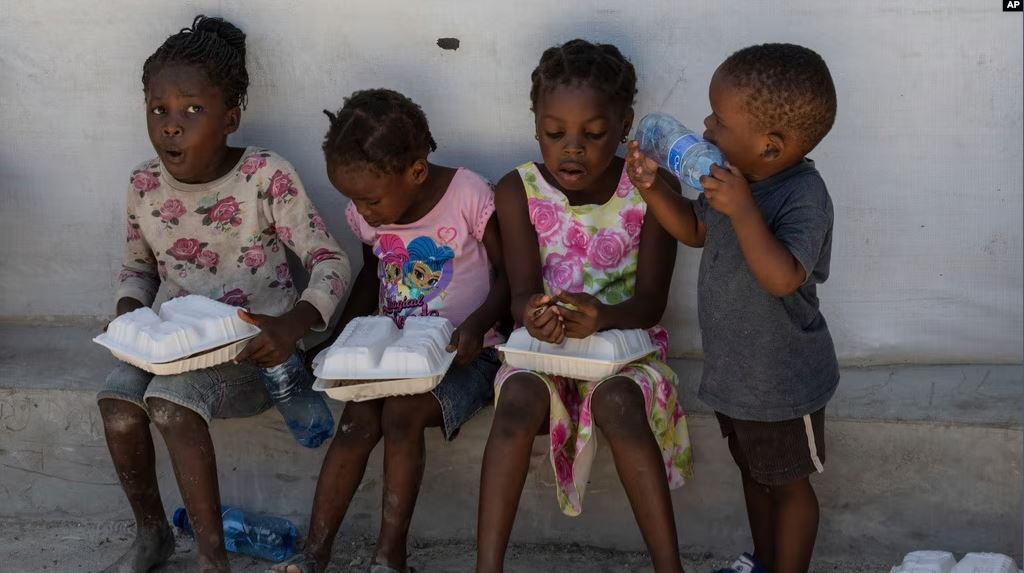
Since February 2024, escalating violence and elevated inhabitants displacements have considerably lowered agricultural manufacturing and disrupted markets, leaving half of Haiti’s inhabitants in acute starvation. Almost 5 million persons are experiencing excessive ranges of acute meals insecurity and round 125 000 kids undergo from extreme acute malnutrition. FAO is looking on the worldwide neighborhood to safe USD 48 million beneath the 2024 Humanitarian Response Plan, to help 608 000 individuals with emergency agriculture actions.
“FAO stays dedicated to offering pressing agricultural help for the upcoming planting seasons, however further funding is required to avoid wasting lives, forestall starvation and famine, and assist weak populations restore their livelihoods amidst unprecedented violence and displacement”, mentioned Rein Paulsen.
FAO’s priorities
FAO has proven that native meals manufacturing and entry to seeds are sustainable and cost-effective options, important to stopping a bigger meals disaster. An evaluation by the FAO Data in Emergencies Hub underscores that agricultural actions supply a buffer towards violence and insecurity, permitting rural households to supply their very own meals.
In crisis-affected, city, peri-urban and rural populations within the Metropolitan Space of Port-au-Prince and Grand’Anse division, FAO goals to enhance entry and availability of meals for weak households. The specialised Company of the United Nations plans to help displaced and host households by way of money, by combining the availability of money transfers with agricultural enter packages and coaching. This strategy allows crisis-affected households to satisfy their rapid wants, whereas partaking in meals manufacturing for family consumption and to generate earnings, in addition to sustaining their productive property. Relying on the native circumstances, recipients could also be supplied with both money, agricultural inputs, coaching or a mix of these kind of help.
With alarming ranges of acute malnutrition, notably in areas comparable to Artibonite and the Metropolitan Space of Port-au-Prince, FAO can be centered and ready on offering dietary help to over 276 000 kids susceptible to malnutrition. Nevertheless, with no important improve in funding, FAO’s efforts to mitigate this humanitarian disaster can be severely compromised, affecting the survival of a whole lot of hundreds of individuals.
Subject go to to Grand’Anse
Throughout their discipline go to, Paulsen and Sanches, accompanied by the Ambassador of Canada, André François Giroux; the Deputy Ambassador of america, Usha Elizabeth Pitts; and the Director Normal of the Ministry of Agriculture, Moise Elancie; oversaw the outcomes of earlier key emergency and resilience initiatives, particularly in key worth chains like milk manufacturing in addition to vegetable, small livestock manufacturing, and faculty feeding program within the commune of Marfranc.
Agriculture stays a vital lifeline for 75% of the individuals affected by meals insecurity in Haiti. Offering crisis-affected households, together with internally displaced individuals and host communities, with pressing emergency agricultural help is crucial for survival, and to spice up meals manufacturing and restore their livelihoods. Nevertheless, inadequate funding stays a vital impediment. The price of inaction is excessive since affected inhabitants can be extra weak with elevated humanitarian help wants. Not investing now in agriculture emergencies and resilience will price extra.
Proof from 2023 FAO interventions present that an funding of USD 480 can help a household of 5 individuals to develop staple meals for as much as six months, and an funding of USD 200 supplied 100 grams of seed, and enabled households to supply on common ten various kinds of nutritious greens price round USD 2 500 on the native market.
